
Private tour · Russian Museum
Russian Museum Tour - Icons, Repin, Aivazovsky and Avant-Garde
A private 3-hour Russian Museum tour for travelers who want Russian art to make sense: icons, academic painting, Repin, Aivazovsky, Vrubel, Malevich and the cultural story behind the collection.
Tour snapshot
A calmer alternative to the Hermitage for art lovers
DURATION
3 hours
START
Hotel, port or agreed point
TRANSPORT
Private car or walking route as planned
GUIDE
Licensed private guide
TICKETS
Included for confirmed route
BEST FOR
Russian art from icons to avant-garde
Why this tour exists
Russian art becomes clearer when it is told as one story
The Russian Museum is one of the best places to understand Russia visually. It connects icons, empire, realism, literature, revolution and modernism in a way no single palace can.
It is often calmer than the Hermitage, which makes it a strong second museum or a better choice for travelers who specifically want Russian culture.
A private guide keeps the collection readable: fewer rooms, better selection and a route shaped around your level of art interest.
Plan your private tour
Send the essentials
Date, pickup point, group size, pace and priorities are enough to shape a realistic route.
What’s included
- Admission tickets for the confirmed Russian Museum route
- Licensed private guide with Russian art and history context
- Route through key icons, classical painting, realism and avant-garde works
- Optional emphasis on architecture, collection highlights or a slower art-history pace
What’s not
- A square academic cap that could emphasize your newly acquired proficiency in Russian art
Options
Make it yours
- Icons to avant-garde: For guests who want a serious art-historical sequence.
- Art, literature and history: For mixed-interest groups who want the bigger story.
- Compare with Hermitage: The Hermitage shows you the world. The Russian Museum shows you Russia.
Why you’ll like it
See Russian art from icons to the avant-garde in one readable route
- Understand why works by Repin, Bryullov, Surikov, Malevich and other artists matter
- Connect art, history, religion, empire and revolution with a private guide
- Use this as a calmer alternative or complement to the Hermitage for art-focused travelers
Program
Tour overview
The Russian Museum is more focused than the Hermitage: one country, many centuries, and a clear story from icons to avant-garde.
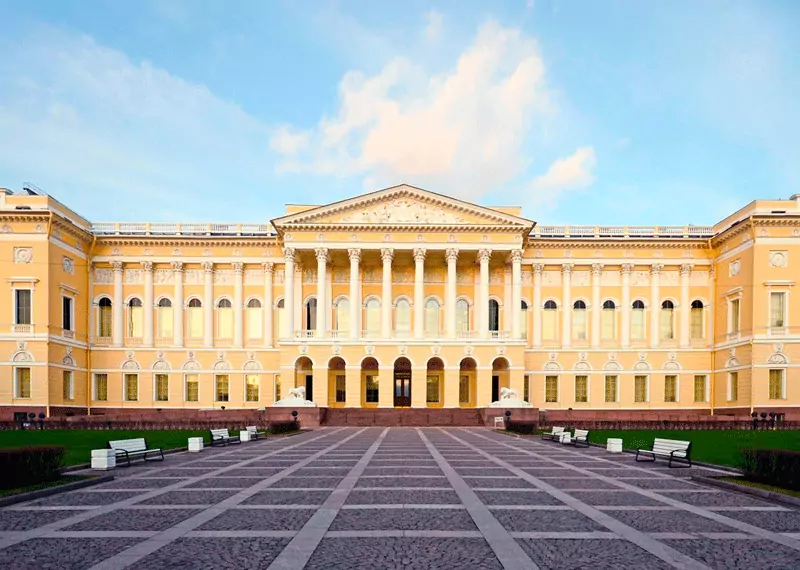
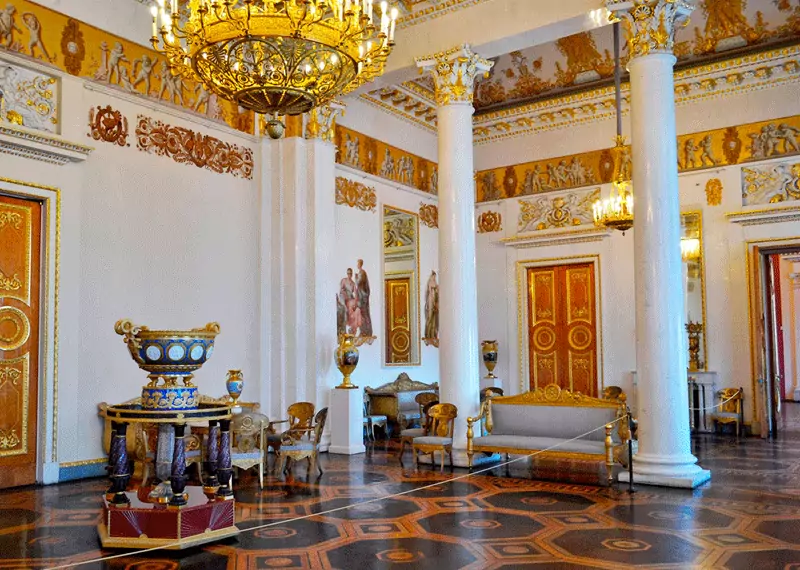
Russian Museum and Mikhailovsky Palace
400,000 works spanning a millennium — from medieval icons to avant-garde experiments. This is where you discover what Russian artists saw, felt, and dreamed.
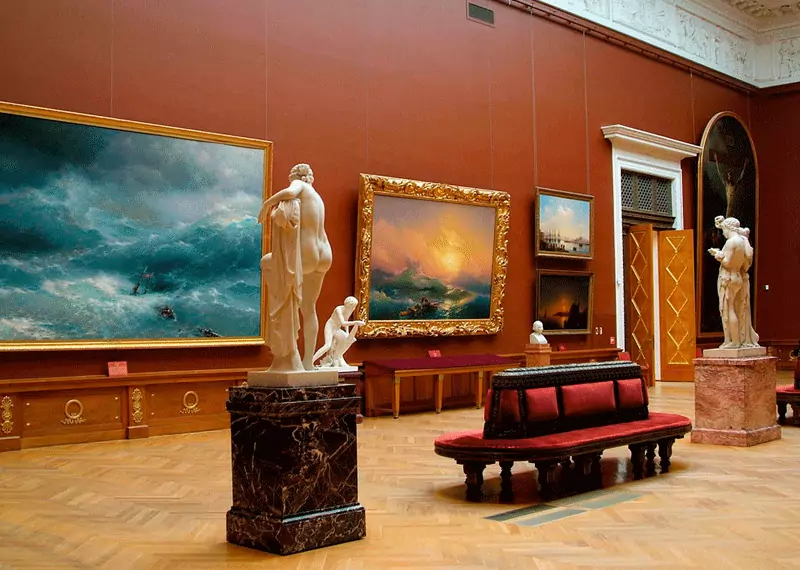
And unlike the Hermitage, the Russian Museum remains wonderfully uncrowded. You can stand before "The Ninth Wave" without anyone blocking your view.
Museum complex and collections
Before oil on canvas, there was tempera on wood. Russian icon painting developed its own visual language — elongated figures, gold backgrounds, faces that seem to look through you.
Your guide helps you "read" these works: the symbolism, the techniques, the spiritual purpose.
Icons, academic painting and Russian art
Karl Bryullov — "The Last Day of Pompeii"
So large it has its own room. So dramatic it made Bryullov famous across Europe. Stand in front of it and feel the chaos of a civilization's final moments.
Ivan Aivazovsky — "The Ninth Wave"
The most famous seascape in Russian art. Survivors cling to wreckage as a massive wave approaches. The light through the water is miraculous.
Ilya Repin — "Barge Haulers on the Volga"
The painting that changed Russian art. Eleven men pulling a boat. Exhaustion, resignation, and one young face still looking up.
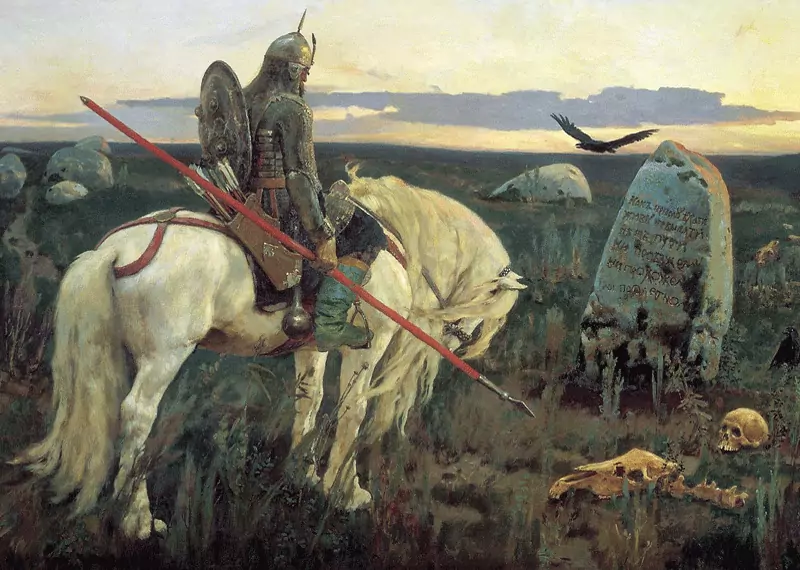
Viktor Vasnetsov — "Knight at the Crossroads"
A warrior before a stone that reads: "If you go straight, you will lose your life." Russian fairy tales made real.
Museum branches and Mikhailovsky Castle
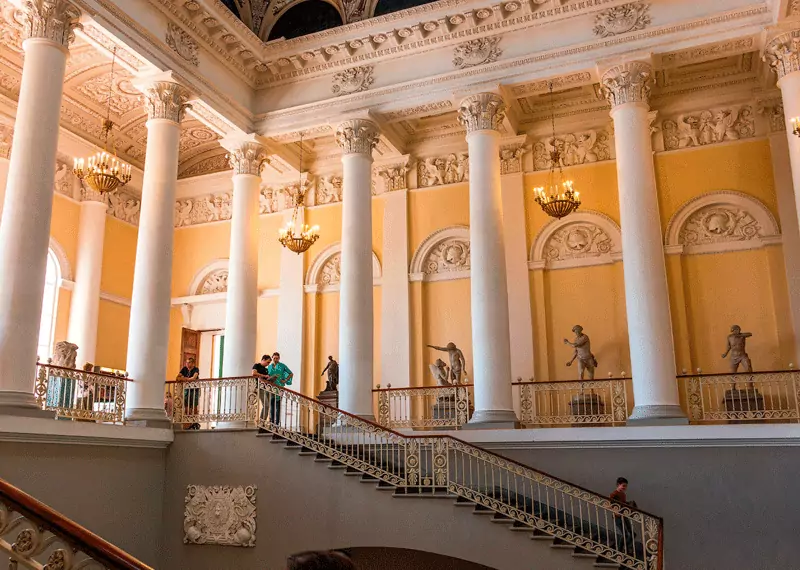
The Mikhailovsky Palace is a masterpiece of Russian Classicism. Designed by Carlo Rossi, it's worth visiting even before you see a single painting.
The museum complex also includes the Mikhailovsky Castle — where Emperor Paul I was assassinated. We can include it if you're interested in the darker side of Russian history.
Stroganov Palace and Peter the Great's Cabin
Kandinsky, Malevich, Chagall — all represented here. See how Russian artists responded to revolution by revolutionizing art itself.
A calmer alternative to the Hermitage for art lovers
Russian art becomes clearer when it is told as one story
Send the essentials
Questions we often hear
Before you book this private route
Most Russian Museum questions are about whether to choose it instead of, or after, the Hermitage.
Is this instead of the Hermitage?
It is different. The Hermitage is global and imperial; the Russian Museum is focused on Russian art and culture.
Can it work for non-specialists?
Yes. The route can be made accessible, with fewer names and more cultural framing.
How long should we plan?
About three hours is a strong private route for most guests.
Is it suitable for children?
Yes, if the route uses stories, images and shorter explanations.
Can we combine it with another route?
Yes. It pairs well with a city route or another museum depending on your energy.
GUEST REVIEWS
Russian Museum tour reviews
Reviews received directly from the guests. The same reviews are also published on Tripadvisor.
Average rating: 5.0/5 based on 3 guest reviews.
All verified guest reviews →
★★★★★ 5/5
“For my husband we did the Artillery Museum and for both of use we did an evening tour of the Hermitage Museum (NO CROWDS!), Yusupov Palace (where Rasputin was murdered) and Russia Art Museum.”
★★★★★ 5/5
“Across 4 days she arranged for us to visit the Hermitage (Winter Palace), Smolny Institute, Peter-Paul Fortress, Aurora Cruiser, Finland Railway Station, Kronstadt, Russian Museum and the Museum of Political History and Rosfoto.”
Ready to plan it?
Tell us what kind of art route you want
Send your date, art interests and group pace. We will shape a Russian Museum route that fits your level of curiosity.