




Private museum route
Hermitage Museum Tour - Private Guide and Essential Route
A private Hermitage museum tour shaped as a clear route through the Winter Palace and essential collections, with a licensed guide, realistic timing and enough focus to make the museum readable instead of exhausting.
Tour snapshot
A museum route, not a museum marathon
DURATION
3-4 hours
START
Hotel, port or agreed point
TRANSPORT
On foot; private car optional
GUIDE
Licensed private guide
TICKETS
Included for confirmed route
BEST FOR
First Hermitage visit
Why this tour exists
The Hermitage needs editing as much as expertise
The Hermitage is too large to treat as a checklist. A good private route gives you the Winter Palace, the essential rooms and the right amount of art history without turning the visit into a race.
Your guide keeps the route readable: imperial interiors, landmark masterpieces, court history and enough context to understand why this museum matters.
The exact order depends on entrance timing, room access and your interests. The aim is a museum visit that feels structured, calm and worth remembering.
Plan your Hermitage tour
Send the essentials
Date, pickup point, group size, pace and special art interests are enough to shape a realistic Hermitage route.
What’s included
- Hermitage admission tickets arranged for the confirmed route
- Licensed private guide focused on the rooms, artists and palace interiors that matter most
- Route through key Old Masters, applied art and Winter Palace interiors
- Optional planning for the General Staff Building, Diamond Room or Gold Room when available
What’s not
- Trying on royal jewelry in the Diamond Room
Options
Make it yours
- Renaissance and Dutch masters: For guests who want Da Vinci, Rembrandt and selected masterpieces explained well.
- Imperial interiors: For travelers more interested in court life, architecture and Winter Palace rooms.
- Add a city route: Combine with a short city tour when your day needs broader context.
Why you’ll like it
See Leonardo, Rembrandt, Raphael, Titian and other essentials through a route that does not feel random
- Understand the Winter Palace interiors as part of the Romanov story, not just as a museum backdrop
- Use the guide to choose the rooms and masterpieces that matter most for your time and interests
- Add the Impressionist collection, Diamond Room or Gold Room only when tickets and timing make sense
Program
Tour overview
The Hermitage is too large for a casual checklist. We choose a clear path through palace interiors, landmark rooms and selected masterpieces.
Winter Palace and museum scale
The Hermitage Museum is the greatest collection of artworks and treasures to ever exist under one roof: 233 345 sq. meters, 3 106 071 total items, 651 931 works of art, 16 903 paintings, 622 452 graphic works, 12 798 sculptures, 13 954 arms and armoury. You could spend days in here and not fully appreciate what’s on offer, so an expert will introduce the main highlights. The tour will start with the palace interiors, which are works of art in their own right.
In the Hermitage Museum you’ll be treated to all the heavyweights: Leonardo da Vinci, Rembrandt, Titian, Raphael, Rubens, Van Dyck, Goya, Michelangelo, the ancient Greeks and Romans...this is a once-in-a-lifetime opportunity to discover the Old Masters with an expert who can teach you how to appreciate what you’re looking at. Instead of glossing over superficial dates and names, your guide will expertly decipher each piece and reveal all the fun secrets embedded within.
Along with the well-known artists you’ll also be introduced to lesser-known masterpieces lurking just off the beaten tourist path, waiting to be discovered. Prepare to be overwhelmed by some of the most ornate furniture in the world including Mahogany bureau with a figure of Apollo and the Peacock Clock.
The collection of European Fine Art is the oldest and largest in the museum, including works by European masters from the Middle Ages to the present day. Your tour will of course include the highlights of the collection. The extensive collection of Italian painting occupies 30 rooms , which pride are works by the great masters of the Renaissance.
Old Masters route
The most important of the Hermitage's 150 canvases by Spanish artists are including works by Ribera, Zurbaran, Velazquez, the most outstanding artists of the 17th century - the "Golden Age" of Spanish painting - give the collection particular significance. The collection of 15th and 16th-century Netherlands painting includes about 100 items, among them several magnificent masterpieces by Robert Campin and Rogier van der Weyden's , Lucas van Leyden.
The collection of 17th and 18th-century Flemish painting includes works by almost all the leading masters of the Flemish school: Flanders, Peter Paul Rubens and his closest associates Anthony van Dyck, and Frans Snyders. The Hermitage collection of the 18th century German painting is the second largest outside Germany. French painting of the 19th to early 20th century is represented by each of the most celebrated masters David, Gros, Ingres, Delacroix.
Your expert guide will be ready to explain in detail the significance of each one of world’s star piece, while simultaneously introducing you to artists you may not know so well.
Rooms beyond the obvious path
During the tour you will reveal the Hermitage's great treasures from one room to another, including the collection of European applied art represented by 65000 works. It is the biggest in Russia and one of the most significant in the world. While you’ll certainly take ample time to analyze masterworks paintings, your guide will also take a moment here and there to introduce along the way some gems of the furniture, Italian and French ceramics, porcelain, Medieval Art, pieces of the arsenal, carriages and others.
This tour can be customised with a visit to the General Staff Building (opposite to the Hermitage museum), where you will enjoy extraordinary collection of impressionist art. Be immersed in the world's most breathtaking Impressionist, Post-Impressionists and the artists of the Nabis group: Manet, Monet, Van Gogh, Degas, Matisse, Renoir, Gauguin and much more. Your guide will steer you effortlessly from one painting to the next, helping you differentiate between periods and styles and transforming you into a veritable art connoisseur.
If you’re looking for something a little more customized and sparkling we can offer you a visit to Golden or Jewellery Chamber. The Hermitage has a considerable collection of jewellery, many pieces formerly in the possession of royal and aristocratic owners. The most important pieces are kept in the Special Collection - The Gold and Diamond Rooms. The remaining objects are dispersed among different exhibitions and storage spaces in the museum.
The Hermitage Diamond Room is stunning, famous for priceless gems that used to belong to the Romanov family as well as diplomatic gifts to Russian court. The Diamond Rooms masterpieces of Russian and European jewelry art and private family collections, as well as pieces of church art and some works by Fabergé will be represented by expert guide along with intrigue stories.
European collections
The Diamond Room also contained a wide variety of tiaras, pins, brooches, medals, orders and pendants of a more modest kind , decorated with precious stones. The Hermitage Golden Room include a unique collection of Scythian Gold, Greek antiquities and ancient silver, in addition to splendid gold pieces created by Oriental and European craftsmen. *Optional visit
The Hermitage can go far beyond the essential route, but deeper is only better when timing, tickets and attention span support it.
The Peacock Clock is one of the museum objects guests remember because it turns technique, theater and imperial collecting into one vivid moment. It can be included when the route through the Pavilion Hall and nearby rooms makes sense for your timing.
General Staff, Diamond Room or Gold Room
These specialist rooms can add a different kind of depth: jewelry, ceremonial objects, ancient gold and court culture. They require separate access logic, so we treat them as planned extensions, not casual promises.
If your interest leans toward French art, Impressionism or modern painting, the route can shift toward the General Staff Building or be planned as a second museum focus rather than forced into a first Hermitage visit.
The guide is not there to recite labels. The value is selection: which rooms to skip, where to slow down, how palace interiors and paintings connect, and how to keep the visit memorable instead of exhausting.
Winter Palace
Pavilion Hall
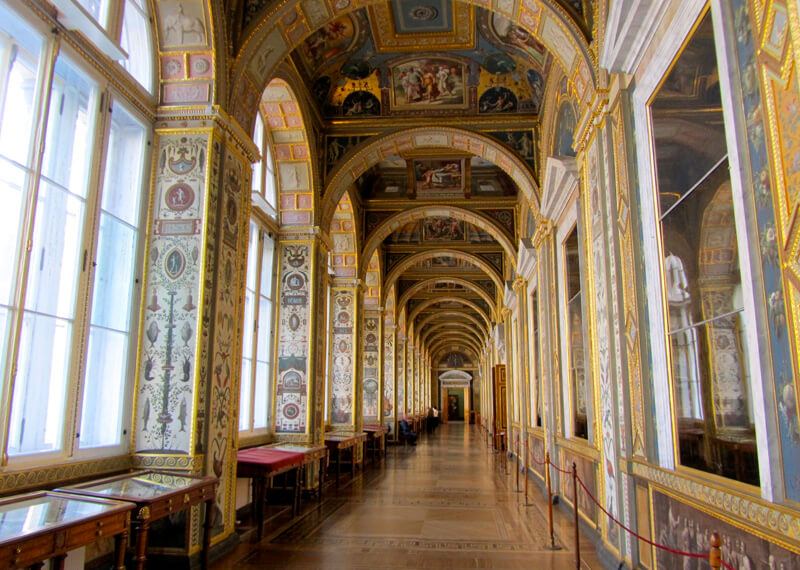
Raphael Loggias
Questions we often hear
Before you book this private route
Most Hermitage questions are about time, crowds, children and how much art to include.
Are Hermitage tickets included?
Three to four hours is a practical private route for most guests. Longer is possible, but the visit should be planned around your attention span.
Can we focus on art instead of palace rooms?
No one sees everything in one visit. The value of a guide is choosing what matters and making the route coherent.
Is three hours enough?
Yes, if the route is edited. We use palace rooms, stories, objects and shorter explanations rather than a long art lecture.
Can we add the General Staff, Diamond Room or Gold Room?
Yes. Tell us if you prefer Renaissance, Dutch masters, French art, imperial interiors or a mixed route.
Does this work from a cruise ship?
Yes, entrance timing is part of the plan. We check the best available option for your date before confirmation.
Ready to plan it?
Tell us how deep you want the museum to go
Send your date, group size, art interests and whether this is your first Hermitage visit. We will shape the route around your pace.